
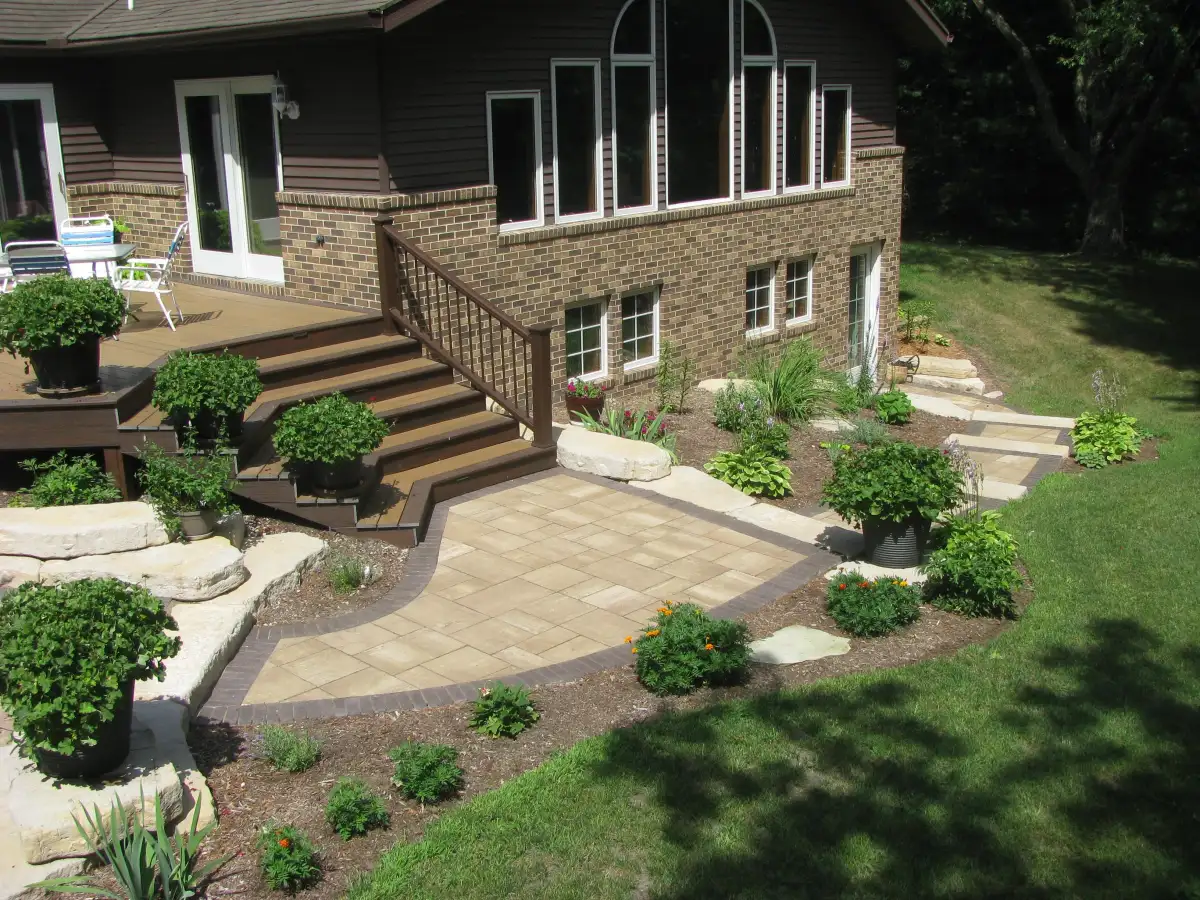
Mulch Installation in Waterloo, Iowa
Professional mulch application that protects your plantings, suppresses weeds, and gives every landscape bed a clean, finished appearance. Serving the entire Cedar Valley.
Schedule a ConsultationWhy Mulching Matters in Iowa
Mulch is one of the simplest and most effective ways to improve the health and appearance of your landscape. A fresh layer of quality mulch retains soil moisture during Iowa's hot summers, insulates root systems against winter temperature swings, suppresses weed germination, and adds organic matter to the soil as it decomposes. For properties in the Cedar Valley, where Black Hawk County's clay soils bake hard in July and saturate in April, mulch acts as a buffer that moderates these extremes.
At Matthias Landscaping Co., mulch installation is more than dumping material into beds. We start by pulling weeds, removing old decomposed mulch when buildup has become excessive, re-cutting clean bed edges, and inspecting plantings for any issues. We then apply fresh mulch at the correct depth — thick enough to suppress weeds and retain moisture, but not so thick that it smothers root systems or holds excess moisture against tree trunks and shrub stems.
We recommend annual mulch refreshment for most Cedar Valley properties, typically in late April or May after the spring cleanup is complete and before summer heat sets in. Some properties with large bed areas benefit from a lighter fall top-dressing as well to protect roots heading into winter.
Choosing the Right Mulch for Your Property
Shredded Hardwood
The most popular choice for residential landscape beds in the Cedar Valley. Shredded hardwood mulch knits together to resist wind displacement, breaks down slowly to enrich the soil, and provides a natural, clean appearance. Available in natural brown tones that complement most home exteriors and plantings.
Cedar Mulch
Cedar mulch offers a pleasant natural aroma and contains oils that act as a mild insect deterrent. It decomposes more slowly than standard hardwood, making it a good choice for beds where longer-lasting coverage is preferred. The light golden color weathers to a soft grey over the season.
Dyed Mulch
Available in black, brown, and red, dyed mulch holds its color longer than natural varieties. The color is achieved with iron oxide or carbon-based dyes that are safe for plants and soil. Dyed mulch works well for properties where a consistent, bold bed appearance is the priority throughout the entire growing season.
How We Handle Mulch Installation
Every mulch project includes bed preparation — not just material application.
Weed & Debris Removal
We pull existing weeds, remove fallen branches and leaf debris, and clear any old decomposed mulch that has built up beyond a healthy depth. Starting with a clean bed ensures the new mulch performs at its best.
Edge Cutting
We re-cut clean, defined edges along all bed borders using a bed edger. Sharp edges prevent grass from creeping into beds and give the finished result a polished, professional look that lasts through the season.
Mulch Application
Fresh mulch is spread evenly at the recommended depth of 2 to 4 inches throughout the bed. We pull mulch away from tree trunks and shrub stems to prevent moisture retention against bark, which causes rot and disease over time.
Cleanup
We blow all stray mulch off walkways, patios, driveways, and lawn areas. The job is not done until the beds look sharp and every surrounding surface is clean.
Mulching Mistakes That Harm Your Landscape
Mulch is beneficial when applied correctly, but improper mulching is one of the most common landscape care errors we see across the Cedar Valley. The most damaging mistake is "volcano mulching" — piling mulch in a cone shape against tree trunks. This traps moisture against the bark, encourages fungal growth, and leads to bark decay that can kill the tree over several years.
Over-mulching is another frequent issue. When mulch accumulates to 6 inches or more over multiple years of application without removal, it creates a mat that sheds water rather than absorbing it. Plant roots grow into the mulch layer instead of the native soil, making them vulnerable to drought and temperature extremes. We prevent this by removing excess old mulch before adding fresh material when buildup has become excessive.
Our team applies mulch following ISA (International Society of Arboriculture) best practices — proper depth, clearance from trunks and stems, and appropriate coverage for the specific plants in each bed.
Mulch Installation FAQ
Most Cedar Valley properties benefit from annual mulch application, typically in late April or May. Hardwood mulch decomposes over the course of a season, so an annual refresh maintains the correct depth and appearance. If the existing layer still has decent coverage, a light top-dressing of 1 to 2 inches may be sufficient rather than a full 3-inch application.
We recommend 2 to 4 inches for most landscape beds. This depth is sufficient to suppress most weed germination, retain soil moisture, and moderate soil temperature. Mulch should never be more than 4 inches deep — excessive depth prevents water penetration and oxygen exchange to the root zone. Around trees, we maintain a 3- to 4-inch clearance ring between the mulch and the trunk.
In most situations, we do not recommend landscape fabric under mulch. Over time, the fabric prevents mulch from decomposing into the soil and adding organic matter. It also creates a barrier that plant roots cannot easily penetrate, and weeds eventually root into the decomposed mulch above the fabric anyway. The exception is around gravel beds or areas with no plantings, where fabric can help prevent gravel from mixing into the soil below.
Refresh Your Landscape Beds
Contact Matthias Landscaping Co. for professional mulch installation across Waterloo, Cedar Falls, and the Cedar Valley. We handle the prep, the application, and the cleanup.
Schedule a Consultation