
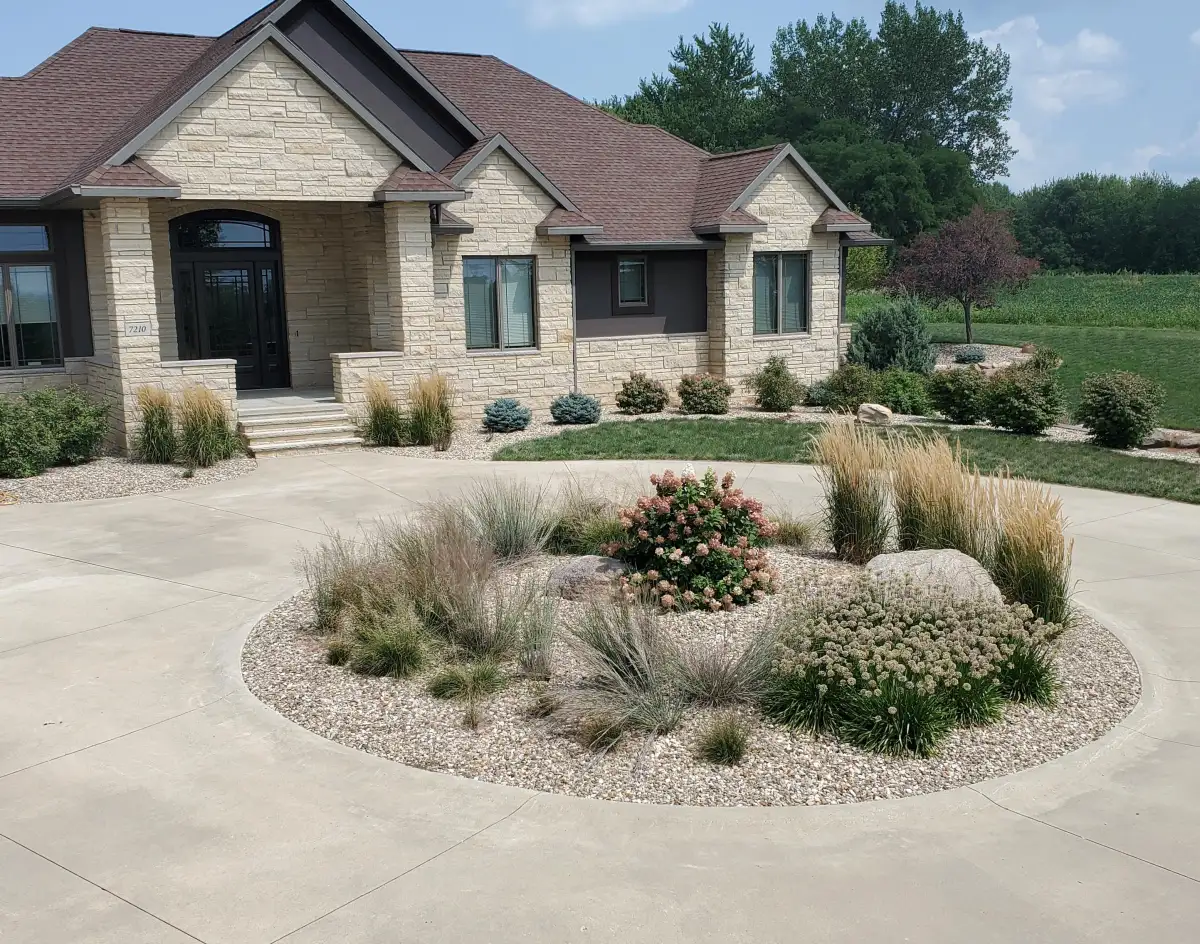
If you are comparing options for landscaping in Waterloo, IA, the most useful first step is not picking plants or browsing patio colors. It is getting clear about what the project needs to solve. Waterloo properties can vary a lot from one block to the next: older homes with mature trees, newer lots with builder-grade lawns, properties near drainage corridors, and backyards where clay soil stays wet after spring rain. A good landscaping conversation should account for those conditions before anyone talks about final materials.
Matthias Landscaping Co. is based in Waterloo and has served the Cedar Valley since 1991. The company works across Waterloo, Cedar Falls, and nearby communities on landscaping, hardscaping, patios, retaining walls, sod and hydroseeding, lighting, and outdoor living projects. If "landscaping" is the broad search term that brought you here, this guide will help you narrow that broad need into the right next question before booking a consultation.
1. What problem should the landscaping solve?
Homeowners often start with a general request: "We need landscaping." That can mean many different things. It may mean the front beds look dated, the backyard has drainage issues, the lawn never established well, the patio is too small, or a slope needs a retaining wall before the rest of the yard can work. The clearer you are about the problem, the more productive the consultation becomes.
For a Waterloo homeowner, the question might sound like this: Do we need curb appeal, outdoor living space, erosion control, lower maintenance plantings, better lawn coverage, or a plan that connects several future improvements? A simple bed refresh is different from a complete landscape design that includes hardscaping, lighting, and phased installation. Naming the problem helps the landscaper recommend the right scope instead of overbuilding or under-planning.
2. Does the property have drainage, grade, or soil issues?
Drainage should be discussed early on Waterloo landscaping projects. The Cedar Valley sees heavy spring rain, winter snowmelt, and freeze-thaw cycles that move moisture through the soil. Many local properties also have clay-heavy subsoil that expands when wet and contracts when dry. If a new bed, patio, or wall is placed without understanding water movement, the finished work can settle, wash out, or push water toward the house.
Before booking, walk the property after rain and make a short list of wet spots, erosion areas, low corners, downspout discharge points, and places where mulch or soil moves. Photos help. If you are considering a retaining wall, ask how drainage behind the wall will be handled. If you are planning a patio, ask how the base, slope, and runoff path will work. These are not minor details in northeast Iowa; they are core parts of a lasting project.
3. Is this landscaping only, or does it include hardscaping?
Landscaping usually refers to living and finished outdoor elements: plantings, beds, grading, soil preparation, turf, mulch, trees, shrubs, and seasonal maintenance. Hardscaping refers to built elements such as patios, walkways, retaining walls, seating walls, fire features, and stone borders. Many Waterloo projects need both, but the sequence matters.
For example, if you want new planting beds around a future patio, the patio location and elevation should be planned first. If a slope is losing soil, the retaining wall or grading solution should come before new plants. If a backyard needs better usable space, patio installation may be the central feature, with landscaping added around it to soften edges and create privacy. Ask which part of the project should lead the plan so the finished yard feels intentional.
4. Should I ask for a design plan before installation?
A design plan is especially helpful when the project has multiple pieces: a patio, walkway, retaining wall, planting beds, lighting, sod, and future outdoor living upgrades. Matthias Landscaping's existing site context notes that the design and estimating team works directly with homeowners to develop custom 2D design plans before ground is broken. That planning step can prevent common issues such as a patio that does not connect cleanly to the house, plantings that outgrow the space, or drainage that gets handled too late.
You may not need a full design for every small refresh. Re-mulching beds, adding a few shrubs, or fixing a limited lawn area can sometimes be scoped directly. But if the project changes how you use the property, affects drainage, or will be completed in phases, ask about design first. It gives you a clearer picture of the finished result and helps prioritize what should happen this season versus later.
5. What materials make sense for Waterloo weather?
Materials in Waterloo need to handle hot summers, winter lows, snow, ice, and repeated freeze-thaw cycles. For hardscapes, ask about base preparation, aggregate depth, compaction, edge restraint, joint materials, and drainage. For plantings, ask about mature size, sun exposure, salt tolerance near drives and walks, and plants suited for Iowa's climate. For lawn establishment, ask whether sodding, hydroseeding, or seeding is the best fit for your site and timeline.
Material selection should follow the site conditions, not the other way around. A paver that looks good in a sample may still need the right base to perform. A plant that looks good at installation may be too large in three years if the bed is narrow. A lawn solution may fail if downspouts or shade issues are ignored. Ask how each recommendation fits your specific property.
6. What timing should I expect?
Landscaping schedules in Iowa are seasonal. Spring is busy with cleanup, lawn repair, drainage discoveries, and early planting. Summer is common for patios, outdoor living spaces, lighting, and larger installations. Fall can be a strong time for planting and lawn establishment because temperatures are cooler and moisture is often more consistent. Winter is typically better for planning future work than installing most landscape elements.
If you have a target date, mention it early. If you want a patio ready before a graduation party, a front landscape cleaned up before listing a home, or a lawn established before fall, timing affects the scope. A reputable consultation should be honest about lead times and whether a project can be completed well within the desired window.
7. What should I prepare before contacting a landscaper?
You do not need professional measurements before reaching out, but a little preparation helps. Take several photos from different angles, including wide shots and close-ups of problem areas. Note where the sun hits in morning and afternoon. Identify wet areas, slopes, utility boxes, narrow access points, fences, gates, pets, irrigation, and anything that affects equipment access. Make a list of what you like and dislike about the current yard.
Also think about how you use the space. Do you need lawn for kids or pets? Privacy from neighbors? A low-maintenance front entry? A place to grill? Safer steps? Better lighting near a walkway? The best landscaping plan supports real use, not just a nicer photo from the street.
8. Which service page should I read next?
If you are still in the early research stage, start with the main landscaping service page and the Waterloo service-area page. If the project includes built features, review hardscaping, patio installation, and retaining walls. If the project is about a full plan before installation, review landscape design. For turf establishment, compare sod and hydroseeding. For evening use, safety, or curb appeal after dark, see landscape lighting.
When you are ready to talk through the project, the next step is simple: contact Matthias Landscaping Co. or call (319) 226-6000. Share the property address, a few photos if available, and the main goal you want the landscaping to accomplish.
FAQ: Waterloo Landscaping Before Booking
What should Waterloo homeowners ask before booking landscaping?
Ask what problem the project should solve, how drainage and grade will be handled, whether design planning is needed, which materials fit Iowa freeze-thaw conditions, what timing is realistic, and what photos or measurements will help the consultation.
Is landscaping different in Waterloo than in nearby areas?
Yes. Waterloo properties often need close attention to Cedar Valley clay soils, spring drainage, mature neighborhoods, newer builder-grade lots, and outdoor surfaces that must handle freeze-thaw movement.
Should I start with landscape design or installation?
Start with design when the project includes several connected elements, such as patios, walls, planting beds, lighting, drainage, or future phases. Smaller refreshes may be scoped directly after a site review.
How do I prepare for a landscaping consultation in Waterloo?
Take photos of the property, note wet spots or erosion, list how you want to use the space, identify access limits, and decide whether the project must be completed in one phase or can be planned over time.
Ready to ask specific questions about your yard? Schedule a consultation with Matthias Landscaping Co. for landscaping in Waterloo and the Cedar Valley.